


It is what a company would get back to shareholders if liquidated; it’s the value of a business. Stockholders’ equity represents the owners’ residual claim after liabilities are settled, providing a snapshot of the company’s financial health. Investors analyze it to assess the company’s stability, growth potential, and ability to generate returns, aiding in informed investment decisions. Dividends are distributions of profits to shareholders and are paid out of retained earnings, a component of stockholders’ equity. When dividends are declared, retained earnings decrease, leading to shareholder equity formula a reduction in total stockholders’ equity, reflecting the outflow of resources to shareholders.
Here’s How I’m Planning to Transform Myself and My Business in 2026
Nonetheless, a company’s shareholder value should not be confused with its liquidation value. It is because, during liquidation, a company’s physical asset values are reduced, and there are other extraordinary circumstances that are taken into account. The value of capital assets and property, including patents, structures, machinery, and notes receivable, are considered long-term assets. It’s significant to note that certain assets, such as fixed assets, do not have their recorded values increased to reflect rises in market value. A dividend payable account is used by the corporation to record the obligation to pay a dividend once it is declared by the board. However, debt is also the riskiest form of financing for companies because the corporation must uphold the contract with bondholders to make the regular interest payments regardless of economic times.
How to Calculate Shareholders Equity
- ROE is a financial metric that measures how much profit is generated from a company’s shareholder equity.
- You can calculate shareholders’ equity using the basic Accounting Equation or the Investor’s Equation.
- A line item for the shareholder’s equity can be found in the balance sheet of a business or enterprise.
- The par value is typically set very low (a penny per share, for example) and is unrelated to the issue price of the shares or their market price.
- The fundamental accounting equation states that the total assets belonging to a company must always be equal to the sum of its total liabilities and shareholders’ equity.
- This amount represents the net book value of the company available to shareholders.
Other Comprehensive Income (OCI) is also a crucial parameter in the shareholders’ equity formula. OCI is the income, revenue, expenses, or loss that a company hasn’t realized when preparing the audited financial statement in an accounting period. Since the OCI refers to the unrealized income or expense, it is not included in the net income of a company in the balance sheet. It is possible to determine a company’s shareholders’ equity by deducting its total liabilities from its total assets, both of which normal balance are listed on the balance sheet.

How to Calculate Shareholders’ Equity Using the Formula for Your Balance Sheet
Retained Earnings, a.k.a., retained surplus or retention ratio, play a major role in the shareholders’ equity formula. This article explains the features, benefits, and the definition of shareholders’ equity. It also elaborates on the shareholders’ equity formula so that you can calculate it quickly and conveniently.

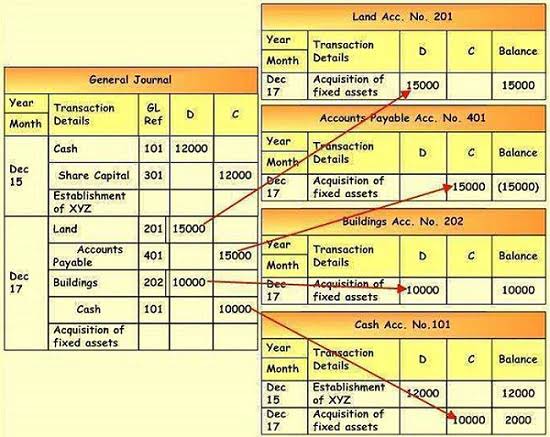
Using this method provides more insight into what drives changes in equity. For instance, if retained earnings increase due to profits or share capital rises due to new stock issuance, shareholders’ equity grows. The share capital amount recorded on the balance sheet reflects the par value of shares issued plus any additional paid-in capital above par value. This represents the initial investment made by shareholders in exchange for ownership. To find stockholders’ equity, you simply subtract the company’s total liabilities from its total assets.
- In short, equity measures the net worth of a company or leftover after deducting all the liabilities value from the value of the assets.
- A dividend payable account is used by the corporation to record the obligation to pay a dividend once it is declared by the board.
- The concept of shareholders’ equity arises from the need to account for the ownership interest in a corporation.
- Treasury stocks are repurchased shares of the company that are held for potential resale to investors.
- Shareholders’ equity plays a crucial role in this and helps them decide whether to invest in a company by assessing its financial strength.
- Calculating equity is essential when propositioning investors for more funding and advising your shareholders.
- If you consider total equity from a book value perspective, then total equity (book value) can be equal to total shareholder equity expressed in book value on a company’s balance sheet.
Because laws differ somewhat from state to state, accounting for corporations also differs somewhat from state to state. Start increasing your earnings by using better equipment and finding ways to work more efficiently. When your profits go up, so does the amount of money you keep, which in turn raises the value of your company for shareholders. The easiest way to purchase equity is by investing money in the relevant company’s stocks. When it comes to a public company, the shareholder’s equity represents the proportion of net assets received during liquidation. By understanding these details, you’ll be able to calculate stockholders’ equity with confidence.
Everything to Run Your Business

A return on equity that widely changes from one period to the next may also be an indicator of inconsistent use of accounting methods. Return on equity Law Firm Accounts Receivable Management (ROE) is a financial performance ratio that demonstrates how it uses shareholders’ equity to generate net income. Daily operations leave their mark on both sides of the balance sheet, creating ripples in the equity pool. Picture buying new equipment—while asset composition changes, the equity stays steady. The primary purpose of holding treasury stock is to secure the company’s future, such as raising capital to tackle any uncertainties.